
Table of Contents
ToggleHair Density: Overview
Have you ever wondered why some people have a thick-looking ponytail even though their hair strands are fine, while others have thicker hair strands but their scalp is still visible?
Many people believe this is only because of hair thickness, but that’s not always true. In many cases, the real reason is hair density.
Hair density refers to the number of hair follicles producing hair within a specific area of the scalp.
It plays an important role in how full your hair looks, how you style it, and even which hair care products work best for your hair.
However, hair density is one of the most misunderstood topics in hair care. Many people confuse it with hair thickness, even though the two are completely different.
Understanding your hair density can help you build a hair care routine that suits your hair instead of following trends that may not work for you.
In this guide, you’ll learn what hair density is, what affects it, how to check your hair density at home, and simple tips to care for your hair based on its density.
What Is Hair Density?
Hair density refers to the number of hair strands growing on a specific area of your scalp.
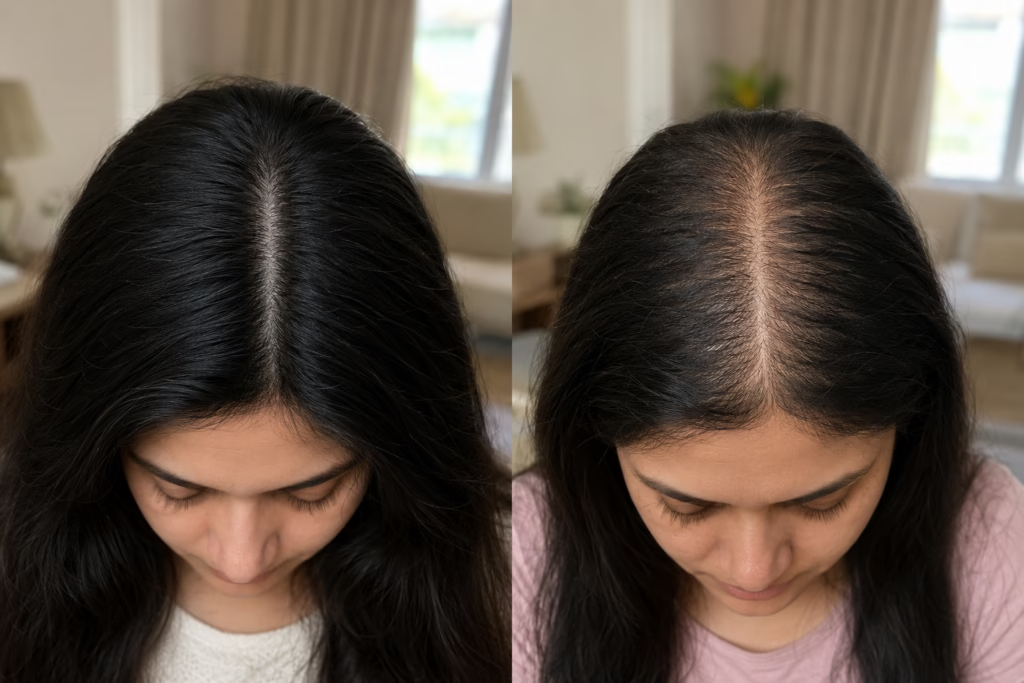
In simple words, it tells you how much hair you have on your head, not how thick each individual hair strand is.
Let’s look at an example.
- Person A has thousands of fine hair strands growing close together.
- Person B has fewer hair strands, but each strand is much thicker.
Even though Person B has thicker hair, Person A’s hair may look fuller because there are more hair strands covering the scalp.
This is why hair density is about the number of hair strands, while hair thickness is about the width of each individual strand.
Your hair density is mostly determined by the number of active hair follicles on your scalp.
Most people are born with a certain number of hair follicles, and this number usually stays the same throughout life.
However, factors such as genetics, age, hormones, and overall scalp health can affect how many of those follicles continue to grow healthy hair.
Why Is Hair Density Important?
Hair density affects much more than just how your hairstyle looks. It also plays an important role in how you care for and manage your hair every day.
Your hair density can affect:
- How full and thick your hair appears.
- How visible your scalp looks.
- How much product your hair needs.
- Which hairstyles and haircuts suit your hair density the best.
- How well your hair holds curls and volume.
- How easily your hair gets tangled.
For example, people with low-density hair may notice that heavy oils or thick creams make their hair look flat, greasy, or weighed down.
On the other hand, people with high-density hair often need more conditioner because they have more hair strands that need proper moisture and care.
Understanding your hair density helps you choose the right products, hairstyles, and care routine that work with your natural hair instead of making your hair harder to manage.
Why Hair Density and Hair Thickness Are Not the Same
Many people use the terms hair density and hair thickness as if they mean the same thing, but they describe two completely different features of hair.
Understanding the difference can help you know your hair better and choose the right care routine.
Hair Density | Hair Thickness |
Refers to the number of hair strands growing on your scalp | Refers to the width or diameter of each individual hair strand |
It determines how full or dense your hair looks. | It determines how fine or coarse each strand feels |
Depends mainly on the number of active hair follicles | Depends on the size of each hair strand |
Can be low, medium, or high | Can be fine, medium, or coarse |
People with high hair density have more hair strands covering the scalp | People with coarse hair have thicker individual strands |
Affects overall hair coverage, volume, and styling | Affects hair texture, strength, and the way each strand feels |
In simple words, hair density tells you how much hair you have, while hair thickness tells you how thick each hair strand is.
Knowing the difference can help you choose products and hair care techniques that match your hair type.
These common combinations show how hair density and hair thickness work together to influence the way your hair looks and feels.
Example | What It Means |
High Hair Density + Fine Hair | Many thin strands grow close together, making the hair |
Low Hair Density + Thick Hair | There are fewer strands on the scalp, but each strand is |
Low Hair Density + Fine Hair | Fewer, thinner strands can make the scalp more noticeable |
High Hair Density + Coarse Hair | A large number of thick strands create hair that looks |
What Factors Affect Hair Density?
Your natural hair density depends on several factors. Some of these factors are within your control, while others are determined by your body and genetics.
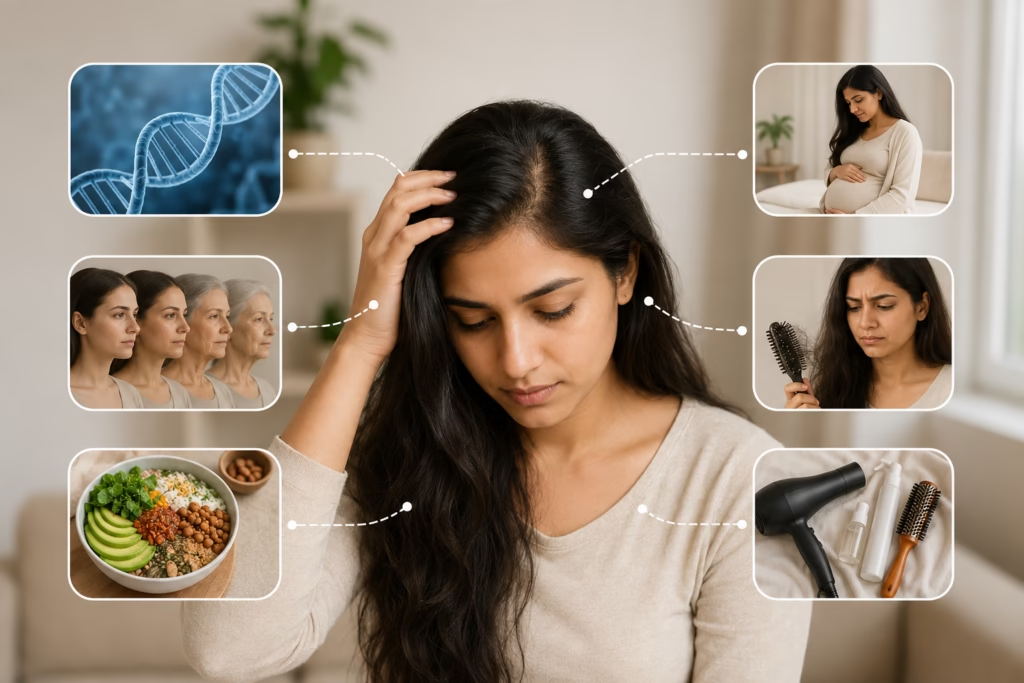
Let’s understand the main things that can influence how dense your hair looks.
Genetics
Genetics is one of the biggest factors that determines your natural hair density.
The number of hair follicles you have on your scalp is mostly decided at birth and is often inherited from your parents. Some people naturally have fuller hair because they have a higher number of active hair follicles.
Although you cannot create new hair follicles naturally, taking good care of your existing follicles can help them continue producing healthy hair.
Age
Hair density can change as you get older.
With age:
- Hair growth may become slower.
- Some hair follicles may become less active.
- Individual hair strands may become finer.
- Hair shedding may increase.
This is why many people notice that their hair looks less full or thinner as they age.
Hormonal Changes
Hormones play an important role in hair growth and the activity of hair follicles.
Changes caused by conditions such as:
- Pregnancy
- Menopause
- Thyroid problems
- Polycystic ovary syndrome (PCOS)
can affect the normal hair growth cycle.
These hormonal changes may cause more shedding or make hair appear less dense, even when the total number of hair follicles has not changed.
For example, many women experience temporary hair shedding after childbirth due to hormonal changes. Learn more in our guide on Postpartum Hair Loss Treatment.
Nutrition
Healthy hair growth depends on getting enough essential nutrients from your diet.
A lack of important nutrients such as:
- Protein
- Iron
- Zinc
- Vitamin D
- Vitamin B12
may contribute to increased hair shedding.
When more hair falls out than usual, your hair may start looking thinner and less dense over time.
To learn more about nutrients that support healthy hair, check out our articles on Biotin for Hair and Zinc for Hair Growth.
Hair Loss Conditions
Certain hair loss conditions can affect the appearance of hair density.
Some examples include:
- Androgenetic alopecia
- Alopecia areata
- Telogen effluvium
These conditions may influence the hair growth cycle in their own ways. If you notice sudden or excessive thinning, finding the underlying cause through proper evaluation is important before trying any solution.
Hair Care Habits
Your daily hair care habits can also affect how full and healthy your hair looks.
Frequent heat styling, harsh chemical treatments, tight hairstyles, and rough brushing can weaken hair and increase breakage or shedding.
These habits usually do not permanently reduce the number of hair follicles, but they can make your hair appear thinner, weaker, and less dense.
Taking gentle care of your hair helps protect the strands you already have and keeps your hair looking healthier.
Can Hair Density Change Naturally?
This is one of the most common questions people have about their hair.
Yes, hair density can change in some situations, but there are certain limits.
Your body usually cannot create completely new hair follicles naturally. However, the way your hair density looks can change depending on the health and activity of your existing follicles.
For example, after temporary hair shedding caused by stress, illness, or other factors, some hair follicles may start producing hair normally again once the underlying issue improves.
Similarly, improving your nutrition, protecting your hair from unnecessary damage, and taking care of scalp problems can help your existing follicles support healthier hair growth.
In simple words, healthy habits can help your current hair follicles work better, but they cannot create new follicles.
Easy Methods to Figure Out Your Hair Density
You don’t need special equipment to get a general idea of your hair density. While a dermatologist can measure it more accurately using professional tool.
These simple methods can help you estimate it at home.
Mirror Test
Stand in front of a mirror in natural light and part your hair down the middle.
- Low density: Your scalp is clearly visible.
- Medium density: The scalp is mainly visible along the part line.
- High density: Your scalp is mostly covered by hair.
Tip: Check your hair when it’s dry, as wet hair or bright lighting can make your scalp appear more visible.
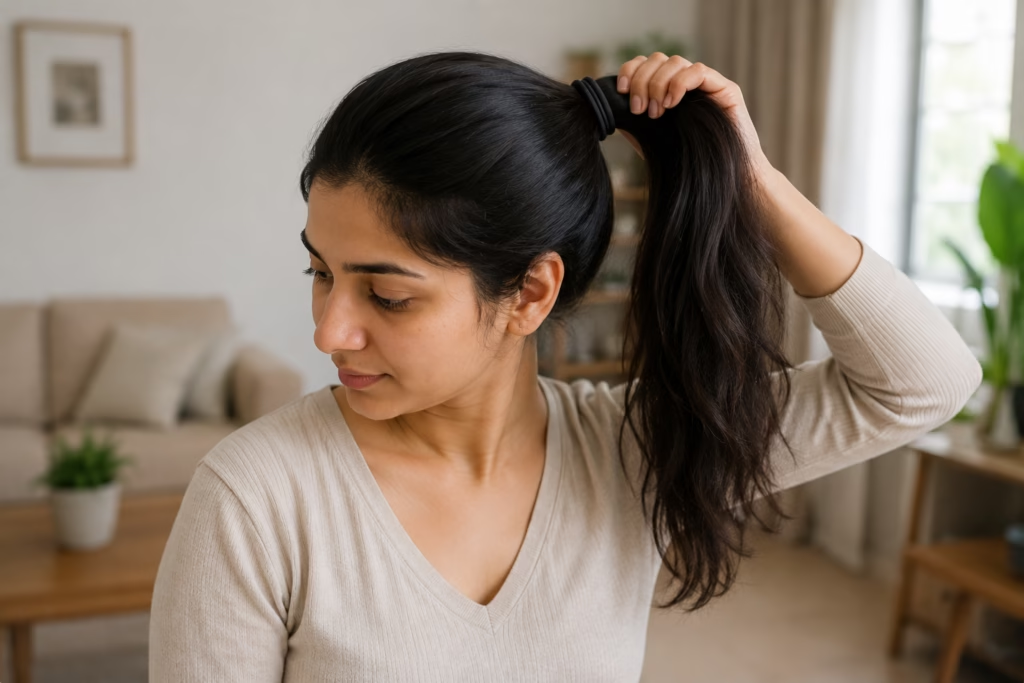
Ponytail Test
- If your hair is long enough, tie it into a loose ponytail.
- A smaller ponytail may suggest lower hair density.
- A fuller ponytail may indicate higher hair density.
Keep in mind that hair strand thickness can also affect your ponytail size, so this test only gives a rough estimate.
Parting Test
Create part lines in different areas of your scalp.
If wide spaces expose more of your scalp, you may have lower hair density. If your scalp stays mostly covered, your hair density is likely higher.
Overall Hair Coverage
Look at how your hair naturally covers your scalp.
If your scalp is easy to notice when you move or style your hair, your density may be lower. If your hair provides good coverage, your density is likely medium to high.
Although these methods cannot measure your hair density precisely, they can give you a better understanding of your hair and help you make smarter hair care choices.
The Three Main Types of Hair Density and How to Care for Each
Hair density is usually divided into three main categories: low, medium, and high density.
Knowing your hair density can help you choose better products, styling methods, and a routine that suits your natural hair.
Low Hair Density
Low-density hair means fewer hair strands are growing on the scalp. This does not always mean your hair is unhealthy, as some people naturally have lower density due to genetics.
Common signs
- Scalp is easily visible.
- Ponytails may look smaller.
- Hair can lose volume quickly.
- Heavy products may make hair look flat.
Care tips
Use lightweight shampoos, conditioners, and styling products. Avoid applying heavy oils near the roots, reduce product buildup, and choose hairstyles that add natural movement and fullness.
Medium Hair Density
Medium-density hair has a balanced number of hair strands and is usually easier to manage. The scalp may be slightly visible, but the hair generally looks full without feeling too heavy.
Common Signs
- The scalp is only slightly visible around the part line.
- Your hair looks naturally balanced—not too thin or too thick.
- Most hairstyles hold their shape without much effort.
- Your hair usually responds well to a wide range of hair care products.
Care tips
Maintain a balanced routine with regular cleansing, proper hydration, gentle detangling, and protection from heat damage. Avoid using too many products that may weigh your hair down.
High Hair Density
High-density hair means many hair strands grow close together, giving the hair a naturally fuller appearance. However, it may require more time and moisture to stay healthy.
Common signs
- Scalp is difficult to see.
- Hair may feel thick or heavy.
- Styling and drying can take longer.
Care tips
Use enough conditioner to keep all strands moisturized, divide your hair into sections while washing or applying treatments, and deep condition when your hair feels dry.
Understanding your hair density helps you work with your natural hair instead of following a routine that may not suit your needs.
Common Myths About Hair Density
There are many myths about hair density that can make hair care confusing. Let’s separate the facts from the fiction.
Myth 1: Thick Hair Always Means High Hair Density
Not true. Having thick hair strands does not always mean you have high hair density. A person may have thick individual strands but fewer hairs growing on the scalp.
On the other hand, someone with very fine hair can have a much higher number of hair strands, making their hair look fuller.
Myth 2: Cutting Your Hair Increases Hair Density
False: Getting regular haircuts can make your hair look healthier by removing split ends and damaged tips, but it does not increase the number of hair follicles on your scalp.
Haircuts improve appearance—they do not change your natural hair density.
Myth 3: Washing Your Hair Frequently Reduces Hair Density
False: Shampooing your hair does not reduce the number of hairs growing on your scalp.
It is normal to lose a few strands during washing because they were already ready to fall out. Shampooing itself does not cause your hair to become less dense.
Myth 4: Anyone Can Naturally Get High Hair Density.
Not always: Hair density is largely determined by your genetics. Healthy habits can support the hair follicles you already have and help them produce stronger, healthier hair.
However, they cannot naturally increase the total number of hair follicles on your scalp.
The goal is to protect and support the hair you already have rather than trying to change your natural hair density.
What Research Says About Hair Density
Hair density is an important clinical measurement used to evaluate certain hair loss conditions.
A study published in PubMed Central (PMC) found that women with female pattern hair loss (FPHL) experienced a gradual decrease in hair density as the condition became more severe.
The researchers also reported that Trichoscopy, a non-invasive scalp imaging technique, can help assess hair density and monitor changes over time.
These findings show why hair density is an important factor when evaluating hair health and some forms of hair loss.
Can You Increase Hair Density Naturally?
This is probably the biggest question people ask after learning about hair density.
The honest answer is:
It depends on why your hair density has changed.
If you were born with naturally low hair density, you cannot create new hair follicles naturally. The number of hair follicles on your scalp is largely determined by genetics.
However, if your hair looks less dense because of temporary hair shedding, poor nutrition, stress, or an unhealthy scalp, improving these factors may help your existing follicles produce healthy hair again.
In other words, you may not increase the number of follicles, but you can help your existing hair grow stronger and healthier.
What Can Make Hair Look Denser?
Although you cannot naturally create new follicles, several healthy habits can improve the appearance of your hair.
Eat a Balanced Diet
Hair is made mostly of protein, so your body needs enough nutrients to support healthy growth.
A balanced diet should include:
- Protein-rich foods
- Iron-rich foods
- Zinc
- Vitamin D
- Omega-3 fatty acids
- Fruits and vegetables
If you suspect a nutritional deficiency, speak with your healthcare provider before taking supplements.
Keep Your Scalp Healthy
Healthy hair starts with a healthy scalp.
A clean scalp helps create a better environment for hair follicles.
Simple habits include:
- Washing your hair when needed
- Treating dandruff if it develops
- Avoiding excessive product buildup
- Keeping the scalp clean without over washing
Reduce Heat and Chemical Damage
Frequent bleaching, straightening, perming, or excessive heat styling can weaken hair and increase breakage.
Less breakage means your hair keeps more of its natural length and fullness.
Whenever possible:
- Use lower heat settings.
- Apply a heat protectant.
- Limit chemical treatments.
Handle Hair Gently
Small daily habits can make a big difference.
Try to:
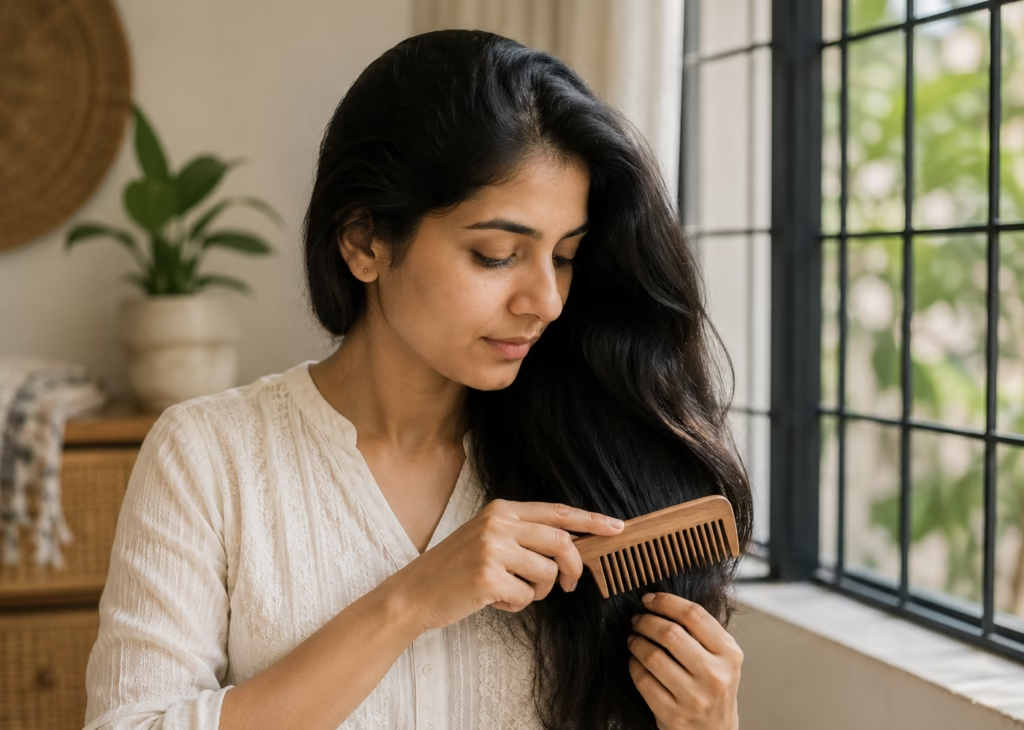
- Detangle gently.
- Avoid pulling your hair too tightly.
- Use a wide-tooth comb on wet hair.
- Avoid rubbing wet hair roughly with a towel.
Healthy hair is often the result of consistent care rather than expensive products.
Manage Stress
Long-term stress can contribute to increased hair shedding in some people.
While reducing stress cannot instantly improve hair density, healthy lifestyle habits such as regular exercise, good sleep, and relaxation techniques may support overall hair health.
Looking for a natural way to manage stress? Explore our guide on Yoga Poses for Healthy Hair Growth to discover simple poses that may help reduce stress while supporting overall hair and scalp health.
Final Thoughts
Hair density is an important part of understanding your unique hair. Whether your hair density is low, medium, or high, each type has different needs.
Instead of following beauty trends, focus on a healthy scalp, balanced nutrition, and a routine that suits your natural hair.
Once you understand your hair density, choosing the right products and caring for your hair becomes much easier.
Frequently Asked Questions
Is hair density the same as hair thickness?
No, Hair density refers to the number of hair strands growing on your scalp, while hair thickness describes the width of each individual strand.
Can hair density improve over time?
Yes, in some situations.
If reduced density is caused by temporary shedding, poor nutrition, stress, or certain scalp conditions, improving these factors may help your hair regain its normal appearance.
Does cutting your hair increase hair density?
No. Haircuts remove damaged ends but do not increase the number of hair follicles.
Can oils increase hair density?
Natural oils help keep the scalp and hair healthy, but there is no strong scientific evidence that they create new hair follicles.
Some oils may reduce breakage, making hair appear fuller over time.
Does aging affect hair density?
Yes, As people age, some hair follicles become less active, and hair may gradually appear less dense.
This is a common part of the natural aging process.

About the Author
Hi, I’m Shashi, founder of Natural Hair Growth. I write evidence-based articles on hair growth, scalp care, and natural remedies to help readers build healthier hair care routines. Read More About Shashi
