
NATURAL HAIR GROWTH

Curly Hair Care Routine: 9 steps for Healthy and Defined Curl

Curly hair is naturally beautiful, but it also needs more care than straight hair. Because of its spiral shape, the natural oils produced by your scalp have a harder time traveling down the hair shaft. 

As a result, curly hair tends to become dry, frizzy, and tangled more easily, making a proper hair care routine essential. 

The good news is that you don’t need dozens of expensive products to keep your curls healthy. 

With the right combination of gentle cleansing, deep conditioning, careful detangling, and proper styling, you can maintain soft, defined, and manageable curls while reducing frizz and breakage. 

Whether your hair is wavy (Type 2), curly (Type 3), or coily (Type 4), following a consistent curly hair care routine can help improve moisture retention, enhance curl definition, and protect your hair from everyday damage. 

In this complete guide, you’ll learn how to identify your curl type, choose the right shampoo and conditioner, detangle your curls without breakage, style them for long-lasting definition, and build a simple routine that keeps your curls healthy every day.

Curly Hair Care Routine at a Glance

A healthy curly hair care routine includes washing with a sulfate-free shampoo, deep conditioning regularly, detangling only on wet, conditioned hair, using curl-friendly styling products, drying curls gently, protecting them while sleeping, and trimming split ends every few months. 

Following these simple habits consistently can help reduce frizz, improve curl definition, and keep your hair healthy and manageable.

1. Understanding Your Curl Type

Before starting a curly hair care routine, it is essential to know your curl type. Curls come in different patterns, ranging from wavy to coily and kinky hair. 

Identifying your curl type helps you choose the right products and techniques for better hair management. Here are the different curl types:

Curly Hair Care Routine

How to Identify Your Curl Type

  • Wavy Curls (Type 2): These curls have an S-shaped wave pattern and are less curly compared to other types.
  • Curly Hair (Type 3): These curls form a bouncy C-shaped pattern and resemble ringlets or springs. They tend to be dry and require more moisture.
  • Coily/Kinky Hair (Type 4): These are tight, coiled curls that shrink after washing. They can have a zigzag or S-pattern and are prone to dryness, requiring intensive moisture care.

2. Cleansing: Choosing the Right Shampoo

Washing curly hair too often can strip away its natural oils, leading to dryness and frizz. Instead, follow a gentle and cleansing curly hair care routine.

Best Practices for Washing Curly Hair

  • Use a sulfate-free shampoo to retain moisture, as sulfate-based shampoos strip the hair of its natural oils.
  • Limit hair washing to once or twice a week to maintain natural moisture. If your hair is extremely dry, washing once a week is enough.
  • Consider co-washing (using a conditioner instead of shampoo) for extra hydration.
  • Massage your scalp gently to remove dirt and buildup without damaging your curls.

Recommended Products

  • Moisturizing or hydrating shampoos
  • Co-wash conditioners for in-between washes
If you’re unsure how often to cleanse curly hair without stripping moisture, our guide on How Often Should I Wash My Hair? can help you find the right washing schedule.

3. Deep Conditioning for Moisture and Strength

Moisturized curls look soft, shiny, and strong. That’s why deep conditioning is essential for curly hair.

Deep Conditioning for Curly Hair

Deep Conditioning Techniques

  • Apply a hydrating deep conditioner once a week.
  • Leave the conditioner on for 20-30 minutes or longer if your hair needs extra moisture.
  • Use a warm towel to help the conditioner penetrate deeply into the hair shaft.
  • Always rinse with cold water to lock in moisture.

Best Ingredients for Deep Conditioning

  • Shea Butter
  • Coconut Oil
  • Aloe Vera
  • Honey

4. Detangling Without Damage

Curly hair tangles easily, so it’s important to detangle it carefully to avoid breakage, detangling is an important part of curly hair care routine.

Best Detangling Methods

  • Always detangle wet hair with conditioner applied.
  • Use a wide-tooth comb to remove knots gently.
  • Gently untangle your hair by beginning at the ends and gradually working your way up to the roots.
  • Apply a leave-in conditioner to reduce friction and make detangling easier.

What to Avoid

  • Never use a fine-tooth comb on dry curls, as it can cause breakage.
  • Avoid rough brushing; instead, gently comb through your curls.

If your curls get knotted frequently, read our guide on Why Does Hair Tangle So Easily? to understand the common causes of hair tangles and natural ways to prevent them.

5. Styling: Defining Your Curls

Styling curly hair correctly enhances its shape and reduces frizz.

Best Styling Techniques for Curly Hair

  • Apply a moisturizing cream, serum, or mousse to damp hair for hydration.
  • Use your fingertips to gently scrunch and define your curls.
  • Spread styling products evenly using the praying hands method.
  • Let your curls air-dry or use a diffuser on low heat for faster drying.

Recommended Products

  • Curl-enhancing creams
  • Lightweight styling gels
  • Alcohol-free mousse

6. Drying Your Curls Without Frizz

Proper drying methods help maintain your curls’ shape and prevent frizz.

Best Drying Techniques

  • Plopping: Wrap your wet hair in a microfiber towel or a cotton t-shirt to absorb excess water.
  • Diffusing: Use a diffuser attachment on low heat to dry curls gently.
  • Air-drying: Let your hair dry naturally without touching it.

What to Avoid

  • Avoid rough towels, as they can cause tangling and frizz.
  • Do not blow-dry on high heat without a diffuser.

7. Refreshing Curls Between Washes

Curly hair can lose its definition quickly. Here’s how to keep your curls fresh between washes:
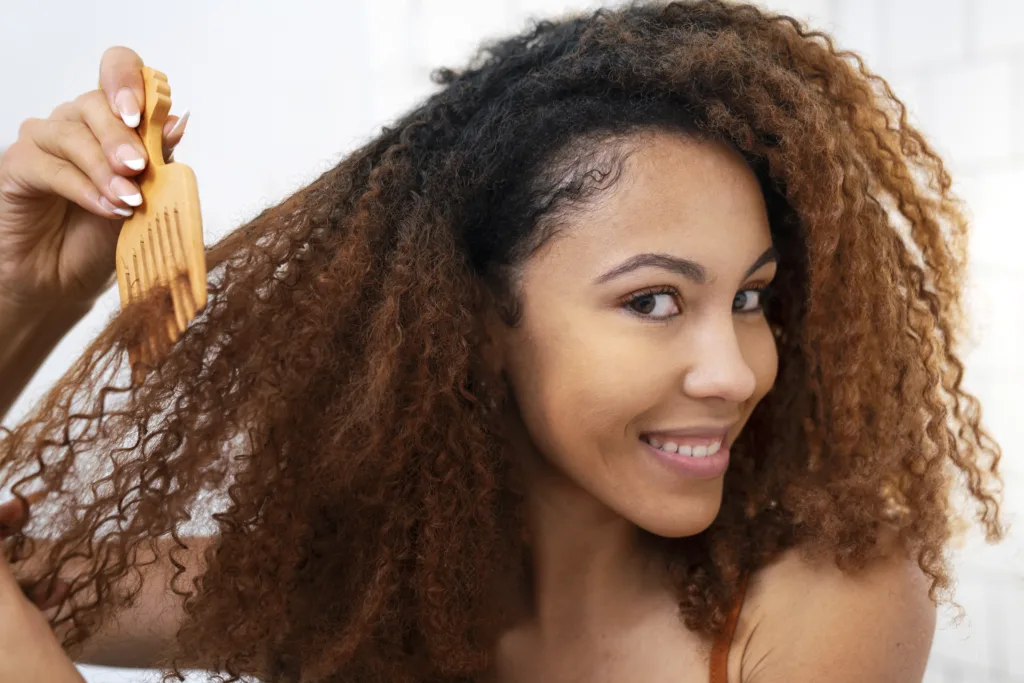
Curly hair Care Routine

Curl Refreshing Techniques

  • Gently spritz your hair with water or a curl-reviving spray to refresh your curls.
  • Apply a leave-in conditioner or curl cream for hydration.
  • Gently scrunch or reshape your curls with your hands to revive them.

8. Night-time Hair Care for Curls

Protect your curls at night to prevent tangles and frizz.

Best Nighttime Hair Care Tips

  • Sleep on a satin or silk pillowcase to minimize friction and prevent hair damage.
  • Tie your hair in a loose pineapple bun to maintain curl shape.
  • Wear a satin or silk scarf/bonnet to protect your curls overnight.

9. Trimming and Protecting Your Curls

Regular trims and protective styles help maintain curl health.

Curly Hair Maintenance Tips

  • Trim split ends every 8-12 weeks to prevent breakage.
  • Avoid excessive heat styling and chemical treatments.
  • Opt for protective styles like braids, buns, or twists to reduce hair loss and breakage.

What Do Dermatologists Recommend for Curly Hair?

According to the American Academy of Dermatology (AAD), curly and coily hair is naturally more prone to dryness and breakage because its shape makes it harder for natural scalp oils to travel along the hair shaft. 

Dermatologists recommend washing curly hair only when needed, using moisturizing products, detangling hair while it is wet with a wide-tooth comb, and protecting curls from friction while sleeping with a satin or silk pillowcase or bonnet. 

Following these practices can help reduce breakage, improve moisture retention, and keep curls healthier over time.

Conclusion

A well-planned curly hair care routine ensures healthy, hydrated, and beautiful curls. 

By following proper cleansing, deep conditioning, gentle detangling, effective styling, and nighttime care, you can maintain your curls effortlessly. 

Every curl pattern is unique, so choose the right hair care products, embrace your natural curls, and let them shine.

If your goal is stronger, fuller-looking hair, you may also find these guides helpful:

Frequently Asked Questions

How often should I wash my curly hair?

Generally, washing curly hair 1-3 times a week is ideal to prevent dryness while keeping the scalp clean.

What is the best way to sleep with curly hair?

To protect your curls overnight:

  • Sleep on a silk or satin pillowcase.
  • Use a loose pineapple bun or a satin bonnet to keep curls intact.
Should I use a conditioner every time I wash my curls?

Yes! Curly hair needs extra moisture, so use a deep conditioner or leave-in conditioner to keep your curls hydrated and frizz-free.

What natural ingredients are good for curly hair?

Curly hair benefits from aloe vera, shea butter, coconut oil, argan oil, honey, and flaxseed gel for hydration, shine, and curl definition.

Can I use heat styling tools on curly hair?

Yes, but limit heat styling. Always use a heat protectant spray and opt for low heat settings to prevent damage.

What products are essential for a curly hair care routine?

A good curly hair routine includes:

  • Sulfate-free shampoo
  • Hydrating conditioner
  • Leave-in conditioner
  • Curl-enhancing cream or gel
  • Hair oil (like argan or jojoba oil)
How often should I trim my curly hair?

Trim your hair every 8-12 weeks to prevent split ends and maintain healthy curls.

Leave a comment